sweat play pdf

Sweat Play: A Comprehensive Overview (as of 01/27/2026)

The term “sweat play” encompasses diverse interpretations‚ ranging from intensely competitive gaming to the physiological effects of perspiration on electronics‚
and even soldering techniques—all explored within this document as of today’s date‚ January 27th‚ 2026.

Defining “Sweat Play” ⎯ Multiple Interpretations

The phrase “sweat play” exhibits a fascinating duality‚ manifesting in both gaming culture and technical contexts. Within competitive gaming‚ a “sweat” or “sweaty player” denotes someone intensely focused on winning‚ often employing aggressive strategies and striving for peak performance. This dedication can involve extensive practice and a highly competitive mindset‚ pushing the boundaries of gameplay.

However‚ “sweat play” also refers to the practical implications of human perspiration—sweat—on electronic devices. This encompasses the corrosive potential of sweat due to its lactic acid content‚ its impact on touchscreen functionality via interference with static charge‚ and its effects on the reliability of connectors like USB-C.

Furthermore‚ in soldering‚ “sweat soldering” represents a specific technique for bonding components. Understanding these varied interpretations is crucial for a comprehensive overview of the subject‚ acknowledging its multifaceted nature.

The Gaming Context of “Sweat”

Within the realm of gaming‚ the term “sweat” functions as slang‚ characterizing players who exhibit an exceptionally competitive and dedicated approach. A “sweaty” player isn’t simply enjoying the game; they are actively striving for victory‚ often employing optimized strategies and demonstrating a high level of skill. This dedication frequently translates into extensive playtime and a relentless pursuit of improvement;

The term can sometimes carry a slightly negative connotation‚ implying an over-seriousness or an unwillingness to engage in casual play. However‚ it primarily acknowledges a player’s commitment and proficiency. “Sweat” can also describe a particularly challenging or intense gaming session‚ or a hand in card games where the outcome hangs precariously in the balance.

Essentially‚ “sweat” in gaming signifies a high-stakes‚ focused‚ and often highly skilled engagement with the game itself.

Physiological Aspects of Sweat

Human sweat‚ a seemingly simple bodily fluid‚ possesses a surprisingly complex composition. Predominantly water‚ it also contains trace amounts of crucial elements like urea‚ various minerals‚ and notably‚ lactic acid. Lactic acid‚ a moderate acid with a pKa of approximately 3.5‚ contributes to sweat’s slightly acidic pH. This composition isn’t static; sweat production is heavily influenced by external factors‚ particularly ambient temperature and humidity levels.

Interestingly‚ increased humidity and temperature often correlate with heightened sweat production‚ potentially impacting the effective series resistance during human touch‚ as observed in touchscreen interactions. Beyond its cooling function‚ sweat’s ionic content grants it electrical conductivity‚ a property with significant implications for electronic devices.

Understanding these physiological aspects is crucial when considering sweat’s interaction with technology.

Composition of Human Sweat

Human sweat is far from a simple saline solution; it’s a complex biofluid meticulously crafted by the body. The primary component is‚ of course‚ water‚ constituting the vast majority of its volume. However‚ dissolved within this aqueous base are vital electrolytes – minerals like sodium‚ chloride‚ potassium‚ magnesium‚ and calcium – essential for maintaining bodily functions. Trace amounts of urea‚ a nitrogenous waste product‚ are also present‚ alongside ammonia and various amino acids.

Crucially‚ lactic acid plays a role‚ albeit in small concentrations. This organic acid contributes to sweat’s slightly acidic pH‚ generally ranging between 4.5 and 6.8. The precise composition varies based on individual factors like diet‚ genetics‚ and hydration levels‚ as well as external conditions such as exercise intensity and environmental temperature.

These components collectively define sweat’s unique properties.

Sweat and Electrical Conductivity

The presence of dissolved ions within sweat grants it a significant‚ and often problematic‚ electrical conductivity. Sodium chloride‚ potassium‚ and other electrolytes readily dissociate in water‚ creating mobile charge carriers. This conductivity is substantially higher than that of pure water‚ making sweat an effective conductor of electricity. The level of conductivity isn’t static; it fluctuates based on sweat rate and the concentration of electrolytes present.

Higher sweat rates‚ coupled with increased electrolyte excretion during strenuous activity‚ lead to greater conductivity. This characteristic is fundamental to understanding sweat’s impact on electronic devices. The ability of sweat to conduct electricity is central to how touchscreens function‚ and also explains why it can cause corrosion and short circuits in sensitive electronics.

Essentially‚ sweat bridges electrical pathways where they shouldn’t exist.

Sweat’s Impact on Electronics

Human perspiration poses a multifaceted threat to electronic devices‚ primarily due to its corrosive nature and conductive properties. Sweat contains lactic acid‚ a moderate acid with a pH that can contribute to the gradual erosion of metallic components over time. This corrosion is exacerbated by the presence of chlorides and other minerals. The USB-C connector‚ with its densely packed pins‚ is particularly vulnerable to corrosion and short circuits caused by accumulated sweat and pocket lint.

Furthermore‚ sweat interferes with touchscreen functionality. While touchscreens rely on static charge‚ sweat creates a conductive pathway‚ disrupting the accurate detection of touch inputs. This can lead to phantom touches or unresponsive screens. The impact is heightened in humid conditions‚ increasing sweat production and conductivity. Careful consideration of materials and design is crucial to mitigate these effects.

Sweat as a Corrosive Agent (Lactic Acid & pH)

Hand sweat isn’t simply water; it’s a complex solution containing trace amounts of urea‚ minerals‚ and crucially‚ lactic acid. Lactic acid‚ possessing a pKa of approximately 3.5‚ acts as a moderate corrosive agent‚ capable of slowly degrading metallic components commonly found in electronic devices. While the concentration of lactic acid in sweat is low‚ prolonged exposure‚ especially in enclosed spaces like connectors‚ can lead to significant corrosion over time.

The pH of sweat also contributes to its corrosive potential. A lower pH indicates higher acidity‚ accelerating the breakdown of metals. This is particularly concerning for sensitive circuitry and solder joints. The presence of other electrolytes in sweat further enhances its conductivity and corrosive effects‚ creating a more aggressive environment for electronic materials. Understanding these chemical properties is vital for designing durable and reliable electronics.

USB-C Connector Insulation and Sweat

The robust design of USB-C connectors doesn’t inherently guarantee resilience against environmental factors like sweat. Concerns arise regarding the insulation voltage of these connectors under real-world conditions‚ where exposure to “crud‚ pocket lint‚ sweat‚ or moisture” is inevitable. Standard test conditions are often meticulously clean‚ failing to replicate the challenges posed by everyday use. Sweat’s conductive properties can bridge insulation gaps‚ potentially leading to short circuits or signal degradation.

The small size and dense pin configuration of USB-C connectors exacerbate this issue‚ providing ample opportunities for sweat to accumulate and compromise insulation. The long-term effects of repeated sweat exposure on the connector’s internal materials require careful consideration during design and material selection‚ focusing on robust insulation and corrosion resistance.

Touchscreen Functionality and Sweat Interference

Touchscreen technology often relies on detecting changes in static charge when a finger interacts with the screen. However‚ the presence of sweat introduces complexities. The fundamental understanding is that a user acts as an “earth” to the screen‚ creating a measurable charge difference. Sweat‚ being primarily water with trace minerals and urea‚ significantly alters this dynamic. It enhances conductivity‚ potentially creating unintended charge paths and disrupting the accurate detection of touch inputs.

Humidity and temperature‚ which influence sweat production‚ further complicate matters. Increased sweating under these conditions can lead to erratic touchscreen behavior or even complete unresponsiveness. The effective series resistance from a human finger touch is also affected by sweat levels‚ impacting signal integrity and touch accuracy.

Soldering Techniques & “Sweat Soldering”

“Sweat soldering” represents an optimized bonding method for circuit boards and metal cladding‚ utilizing solder paste as the primary bonding agent. This technique offers a compelling alternative to adhesive-based methods‚ particularly when considering fabrication costs. Employing adhesives introduces additional expenses related to material procurement and the curing process itself‚ impacting the overall budget.

Sweat soldering achieves a robust and reliable connection without these added costs. It’s considered a superior method for ensuring a strong electrical and mechanical bond. The process relies on the capillary action of molten solder to create a seamless joint‚ maximizing conductivity and minimizing potential failure points. This approach is favored for its efficiency and long-term durability in electronic assemblies.

Sweat Soldering: Process and Advantages

The sweat soldering process is remarkably straightforward‚ primarily requiring only solder paste application. This simplicity contrasts with more complex bonding methods‚ streamlining the fabrication workflow and reducing potential points of error. A key advantage lies in its cost-effectiveness; eliminating the need for separate adhesives significantly lowers material expenses. Furthermore‚ the absence of a curing stage accelerates production timelines‚ boosting overall efficiency.

Beyond cost and speed‚ sweat soldering delivers superior bond strength and reliability. The metallurgical bond formed by the molten solder creates a robust connection‚ resistant to mechanical stress and thermal cycling. This results in enhanced long-term performance and reduced risk of component failure‚ making it ideal for critical electronic applications demanding consistent and dependable connections.

Test Points and Circuitry ⎼ Avoiding “Sweating It”

When encountering test points within a circuit‚ it’s crucial to recognize their inherent limitations. If the destination of these points remains unknown‚ attempting to utilize them offers little practical benefit. Consequently‚ expending excessive effort – or “sweating it” – over their functionality becomes unproductive. A pragmatic approach dictates focusing resources on areas with clearly defined purpose and demonstrable value.

Furthermore‚ if adequate filtering mechanisms are in place‚ the need to meticulously address potential signal interference diminishes. Therefore‚ neglecting minor details or leaving certain aspects open doesn’t necessarily compromise performance. Prioritizing essential elements and avoiding unnecessary complexity streamlines the design process and minimizes potential issues‚ allowing for a more efficient and focused development cycle.

Filtering and Signal Integrity ⎯ When to “Sweat” Details

Maintaining signal integrity is paramount in electronic design‚ and knowing when to meticulously address filtering is key. While leaving certain aspects open might be acceptable if adequate filtering is already implemented‚ it’s not universally true. The necessity of robust filtering depends heavily on the specific application and potential sources of interference.

High temperature and humidity can increase human perspiration‚ impacting effective series resistance during touchscreen interaction. Therefore‚ careful consideration of environmental factors is crucial. “Sweating the details” – meticulously refining filtering techniques – becomes essential when dealing with sensitive signals or environments prone to noise. Ignoring these nuances can lead to unreliable performance‚ highlighting the importance of a thorough and detail-oriented approach.

MOSFET Modeling and Component Libraries

Accurate MOSFET modeling is critical for reliable circuit simulation and design‚ particularly when considering real-world conditions. Building comprehensive component libraries requires sourcing reliable models and verifying their accuracy against empirical data. The challenge intensifies when dealing with a diverse range of MOSFETs‚ as evidenced by the desire to incorporate twenty different Fairchild MOSFET types into LTspice’s model tree.

However‚ obtaining these models can be complicated‚ with some manufacturers employing encryption techniques. Thoroughly vetted models are essential for predicting device behavior under varying conditions‚ including those influenced by environmental factors like temperature and humidity‚ which can indirectly affect performance through sweat-related corrosion or conductivity changes.

Humidity‚ Temperature‚ and Sweat Production

Human sweat production is intrinsically linked to both ambient temperature and humidity levels. Elevated temperatures naturally induce increased perspiration as a thermoregulatory response. Simultaneously‚ higher humidity hinders sweat evaporation‚ leading to greater surface accumulation and prolonged contact with materials. This interplay significantly impacts the electrical conductivity of surfaces‚ as sweat comprises water‚ urea‚ minerals‚ and crucially‚ lactic acid.

The presence of lactic acid‚ a moderate acid with a pKa around 3.5‚ contributes to sweat’s corrosive potential. Increased humidity and temperature can exacerbate this effect‚ potentially lowering the effective series resistance from human touch‚ particularly relevant in touchscreen applications; Understanding this relationship is vital when assessing the reliability of electronic devices exposed to varying environmental conditions and user activity.

Competitive Gaming & “Sweaty” Players

Within the gaming community‚ the term “sweaty” is slang used to describe players who exhibit an exceptionally competitive drive‚ often playing extensively and “trying hard” to achieve high levels of performance. This dedication can manifest as intense focus‚ optimized strategies‚ and a relentless pursuit of victory. A “sweat” can also refer to observing another player’s gameplay‚ analyzing their techniques and anticipating their moves.

The intensity associated with “sweaty” gameplay often correlates with increased physiological responses‚ including elevated heart rate and‚ consequently‚ heightened sweat production. This perspiration can then impact gaming peripherals‚ potentially affecting grip‚ sensor accuracy‚ and overall control. Understanding this connection highlights the interplay between player physiology and performance within the competitive gaming landscape.

Card Games: Understanding “Sweat” Hands

In the context of card games‚ “sweat” describes a particularly tense or precarious hand – one where the outcome hangs in the balance‚ potentially leading to a significant win or a devastating loss. These “sweat hands” create a heightened emotional state for the player‚ as subsequent cards dealt could dramatically alter their fate. The term encapsulates the anxiety and anticipation experienced when facing such a critical juncture in the game.

A “sweat” hand implies a situation where a player’s success is contingent upon specific cards appearing‚ often requiring a favorable turn of events to secure victory. It’s a moment of vulnerability and suspense‚ demanding careful calculation and a degree of luck. The psychological pressure associated with these hands is a core element of the card game experience.

The Role of Static Charge in Touchscreens

Traditional touchscreen technology often relies on the principle of static charge to detect user input. The screen maintains a uniform electrostatic field‚ and when a conductive object – like a finger – makes contact‚ it disrupts this field. This disruption is sensed by sensors embedded within the screen‚ pinpointing the touch location. However‚ the presence of sweat introduces complexities to this process.

Sweat‚ being conductive due to its mineral and electrolyte content‚ can effectively act as an “earth” to the screen‚ altering the static charge distribution. This can potentially interfere with the accurate detection of touch events‚ especially in humid conditions or with individuals who perspire heavily. The interaction between sweat and the electrostatic field is a crucial consideration in touchscreen design and performance‚ impacting responsiveness and reliability.

Real-World vs. Test Conditions for Electrical Components

Electrical component testing frequently occurs in meticulously controlled laboratory environments‚ prioritizing cleanliness and stable conditions. However‚ these idealized settings often diverge significantly from the realities of everyday use. Factors like dust‚ pocket lint‚ and crucially‚ moisture – including sweat – can dramatically impact performance and longevity. USB-C connectors‚ for example‚ may exhibit reduced insulation voltage in real-world scenarios due to the ingress of these contaminants.

The pristine conditions of testing fail to account for the corrosive potential of sweat‚ specifically the lactic acid it contains. This discrepancy highlights the importance of considering environmental factors during design and assessing component robustness against realistic operating conditions. Ignoring these variables can lead to premature failures and unreliable operation in practical applications‚ necessitating more rigorous testing protocols.

Cost Considerations: Adhesives vs. Sweat Soldering

When securing boards and metal cladding‚ fabricators face a choice between adhesive methods and “sweat soldering‚” a technique utilizing only solder paste. While adhesives offer a seemingly straightforward solution‚ they introduce additional fabrication costs due to the curing process and material expenses. Sweat soldering‚ conversely‚ presents a potentially more economical alternative by eliminating the need for separate adhesive materials and associated processing steps.

However‚ a comprehensive cost analysis must consider long-term reliability and potential rework expenses. If adhesive failure occurs‚ repair can be complex and costly. Sweat soldering‚ when properly executed‚ can create a robust and durable bond‚ potentially reducing future maintenance and replacement costs‚ ultimately offering a more cost-effective solution despite initial setup considerations.

LTSpice Modeling and Component Databases

Expanding the capabilities of LTSpice requires a robust component library‚ and incorporating diverse MOSFET models is crucial for accurate simulations. Many engineers‚ facing limitations in pre-built libraries‚ actively seek to expand these resources. One individual‚ for example‚ aimed to integrate twenty different Fairchild MOSFET types into LTSpice’s model tree‚ highlighting a common need for customization.

However‚ accessing and implementing these models can be challenging‚ particularly if manufacturers employ encryption or proprietary formats. Building a comprehensive database necessitates diligent model sourcing‚ verification‚ and potentially‚ reverse-engineering efforts. A well-maintained LTSpice library‚ populated with accurate component models‚ is paramount for reliable circuit analysis and design optimization‚ especially when considering environmental factors like those related to “sweat play”.

Resources and Further Research

Delving deeper into the multifaceted world of “sweat play” necessitates exploring a range of resources. Online forums and communities dedicated to electronics‚ gaming‚ and circuit design frequently host discussions relevant to the interplay between human physiology and technology. Examining threads concerning USB-C connector reliability under adverse conditions—including exposure to moisture‚ lint‚ and‚ crucially‚ sweat—provides valuable insights.

Furthermore‚ research into touchscreen technology‚ particularly the role of static charge and its susceptibility to interference from conductive liquids like sweat‚ is essential. Exploring LTSpice modeling resources and component databases‚ as well as materials science publications detailing corrosion mechanisms related to lactic acid‚ will broaden understanding. Ultimately‚ a holistic approach combining practical observations with theoretical knowledge is key.

adhd worksheets for adults pdf

ADHD Worksheets for Adults PDF: A Comprehensive Guide

Discover a wealth of free and premium ADHD worksheets in PDF format‚ designed to aid adults in managing symptoms‚ goal setting‚ and task completion․

Understanding ADHD in Adults

Adult Attention-Deficit/Hyperactivity Disorder (ADHD) presents uniquely compared to childhood‚ often manifesting as difficulties with executive function – planning‚ organization‚ and time management․ These challenges can significantly impact daily life‚ affecting work‚ relationships‚ and overall well-being․ Unlike hyperactivity often seen in children‚ adults may experience internal restlessness and difficulty focusing․

Worksheets serve as valuable tools for adults seeking to understand their specific ADHD presentation․ They facilitate self-assessment‚ helping individuals identify patterns and triggers․ Recognizing these nuances is the first step towards developing effective coping strategies․ PDF formats offer accessibility and convenience‚ allowing for repeated use and personalization․ Understanding your ADHD is crucial before implementing any management techniques․

Common ADHD Symptoms in Adults

Adult ADHD often presents as persistent difficulties with attention‚ impulsivity‚ and hyperactivity‚ though hyperactivity may appear as inner restlessness․ Common symptoms include chronic procrastination‚ difficulty prioritizing tasks‚ and frequent forgetfulness․ Emotional dysregulation – experiencing intense emotions and difficulty managing them – is also prevalent․

Worksheets can help pinpoint these specific challenges․ Adults may struggle with organization‚ leading to cluttered spaces and missed deadlines․ PDF-based self-assessments can highlight areas needing improvement․ Difficulty focusing impacts work performance and relationships․ Impulsivity can manifest as rash decisions or interrupting others․ Recognizing these symptoms through guided exercises is key to targeted intervention and utilizing appropriate ADHD management strategies․

The Role of Worksheets in ADHD Management

ADHD worksheets serve as practical tools to translate abstract concepts into actionable steps․ PDF formats offer accessibility and portability‚ enabling consistent use․ They facilitate self-awareness by prompting reflection on behaviors and challenges․ Worksheets aren’t a cure‚ but a component of a broader management plan․

These resources help structure thoughts‚ break down overwhelming tasks‚ and build positive habits․ They provide a visual representation of progress‚ boosting motivation․ Adults can use them to identify triggers‚ practice prioritization‚ and develop coping mechanisms․ Regularly engaging with worksheets fosters accountability and empowers individuals to take control of their ADHD symptoms‚ complementing professional guidance․

Types of ADHD Worksheets for Adults

Explore diverse PDF worksheets including time management‚ prioritization matrices‚ goal setting‚ and task breakdown templates – all tailored for adult ADHD needs․

Time Management Worksheets

Adults with ADHD often struggle with perceiving and managing time effectively․ Time management worksheets provide structured tools to combat this challenge․ These PDF resources typically include daily and weekly schedule templates‚ helping individuals visually map out commitments and allocate time for specific tasks;

Furthermore‚ many worksheets incorporate sections for estimating task duration‚ a crucial skill for those prone to underestimating time requirements․ Pomodoro technique tracking sheets are also common‚ encouraging focused work intervals followed by short breaks․ By consistently utilizing these worksheets‚ adults can gain greater awareness of their time usage‚ identify time-wasting activities‚ and develop more realistic schedules‚ ultimately leading to improved productivity and reduced stress․

Prioritization Matrix Worksheets

Prioritization can be exceptionally difficult for individuals with ADHD‚ leading to feeling overwhelmed and struggling to focus on what truly matters․ Prioritization matrix worksheets‚ often based on the Eisenhower Matrix‚ offer a visual framework for sorting tasks by urgency and importance․ These PDF tools typically feature four quadrants: Do First‚ Schedule‚ Delegate‚ and Eliminate․

By categorizing tasks within this matrix‚ adults can quickly identify high-priority items demanding immediate attention and differentiate them from less critical activities․ This process helps reduce decision fatigue and promotes a more focused approach to task management․ Regularly using these worksheets fosters a proactive mindset‚ enabling individuals to effectively allocate their limited energy and attention to the most impactful endeavors․

Goal Setting Worksheets

Goal setting is crucial for individuals with ADHD‚ but often hindered by difficulties with planning and follow-through․ ADHD-specific goal setting worksheets in PDF format provide structured support to overcome these challenges․ These worksheets typically guide users through breaking down large‚ overwhelming goals into smaller‚ more manageable steps․ They often incorporate elements of SMART goals – Specific‚ Measurable‚ Achievable‚ Relevant‚ and Time-bound․

Furthermore‚ these tools frequently include sections for identifying potential obstacles and developing contingency plans․ Visual aids‚ like progress trackers and reward systems‚ are commonly integrated to maintain motivation and reinforce positive behavior․ Utilizing these worksheets empowers adults with ADHD to define clear objectives and cultivate a sense of accomplishment as they progress towards their desired outcomes․

Task Breakdown Worksheets

Task breakdown worksheets are invaluable tools for adults with ADHD who struggle with initiating and completing tasks․ These PDF resources facilitate the decomposition of complex projects into smaller‚ more approachable sub-tasks․ This process combats feelings of overwhelm and paralysis often experienced due to ADHD․ Worksheets commonly feature columns for listing each sub-task‚ estimating completion time‚ and prioritizing based on urgency and importance․

Many also include space for noting required resources and potential roadblocks․ By visually mapping out the steps involved‚ individuals can gain a clearer understanding of the overall workload and develop a more realistic plan of action․ Consistent use of these worksheets fosters a sense of control and promotes sustained engagement‚ ultimately leading to increased productivity and reduced procrastination․

Specific Worksheet Techniques

Explore proven methods like the Eisenhower Matrix‚ Pomodoro tracking‚ and daily planning templates – all available as PDF worksheets for ADHD management․

The Eisenhower Matrix for Prioritization

Utilizing the Eisenhower Matrix‚ a powerful prioritization tool‚ helps adults with ADHD conquer overwhelm by categorizing tasks based on urgency and importance․ This PDF worksheet guides users to classify activities into four quadrants: Do First (urgent & important)‚ Schedule (important‚ not urgent)‚ Delegate (urgent‚ not important)‚ and Eliminate (neither urgent nor important)․

Effectively managing these quadrants reduces procrastination and enhances focus․ The worksheet prompts self-reflection on task values‚ fostering mindful decision-making․ By visually representing priorities‚ it minimizes the cognitive load often experienced by individuals with ADHD․ Downloadable templates simplify implementation‚ promoting consistent use and improved time management skills․ This technique empowers users to concentrate on high-impact activities‚ leading to increased productivity and reduced stress․

Pomodoro Technique Tracking Sheets

Employing the Pomodoro Technique‚ a time management method‚ can significantly benefit adults with ADHD․ PDF tracking sheets facilitate focused work intervals‚ typically 25 minutes‚ separated by short breaks․ These worksheets provide a structured framework to combat distractibility and maintain concentration․ Users record completed “pomodoros‚” fostering a sense of accomplishment and boosting motivation․

Detailed tracking allows for self-assessment of productivity patterns and identification of peak performance times․ The sheets often include sections for noting interruptions and challenges encountered‚ promoting self-awareness․ Downloadable templates simplify implementation‚ encouraging consistent practice․ By breaking down tasks into manageable chunks‚ the Pomodoro Technique reduces overwhelm and enhances task completion rates for individuals navigating ADHD symptoms․

Daily/Weekly Planning Templates

Effective planning is crucial for adults with ADHD‚ and PDF daily and weekly templates offer a structured approach․ These worksheets typically feature sections for prioritizing tasks‚ scheduling appointments‚ and allocating time blocks․ They help overcome procrastination by breaking down larger goals into smaller‚ actionable steps․ Downloadable formats allow for easy customization and repeated use․

Templates often incorporate space for noting important deadlines‚ commitments‚ and self-care activities․ Visual layouts‚ such as color-coding or checklists‚ can enhance organization and clarity․ Consistent use of these planning tools fosters a sense of control and reduces feelings of overwhelm․ Utilizing these resources promotes proactive time management and improved daily functioning for individuals managing ADHD․

Habit Trackers for Consistency

ADHD often presents challenges with consistency‚ making habit trackers invaluable tools․ PDF habit trackers provide a visual representation of progress‚ motivating individuals to maintain desired behaviors․ These worksheets typically involve listing habits and marking off successful completion each day or week․ This simple act of tracking reinforces positive routines and builds momentum․

Effective trackers allow for customization‚ enabling users to focus on specific habits relevant to their goals․ They can range from simple checklists to more detailed templates with space for notes and reflections․ Regularly reviewing the tracker highlights patterns‚ identifies obstacles‚ and encourages adjustments․ Utilizing habit trackers fosters self-awareness and promotes long-term behavioral change for adults with ADHD․

Accessing ADHD Worksheets in PDF Format

Find downloadable PDF worksheets from free printable sources‚ premium bundles‚ ADHD coaches‚ and online platforms‚ offering diverse tools for symptom management․

Free Printable ADHD Worksheets

Numerous online resources offer complimentary‚ printable ADHD worksheets catering to adults․ These readily available tools provide immediate support for managing common challenges․ Resources like Roxana Cardos’s “ADHD DECODED” offer sample worksheets focusing on identifying mistakes and solutions․

These worksheets commonly address areas such as time management‚ task initiation‚ and emotional regulation․ You can discover worksheets designed to help break down overwhelming tasks into manageable steps‚ fostering a sense of accomplishment․ Many sites compile collections of free resources‚ providing a starting point for individuals seeking self-help tools․

However‚ remember that while free resources are valuable‚ they may lack the personalized guidance offered by professional support․ Explore various options to find worksheets that best suit your specific needs and learning style․

Premium Worksheet Bundles

While free resources are plentiful‚ premium ADHD worksheet bundles offer a more structured and comprehensive approach to symptom management․ These curated collections‚ often developed by ADHD coaches and professionals‚ provide a deeper dive into specific areas of challenge․

Bundles typically include a wider variety of worksheets‚ covering topics like prioritization‚ goal setting‚ habit tracking‚ and emotional regulation․ They may also feature detailed instructions‚ examples‚ and supplementary materials to enhance understanding and application․ Investing in a premium bundle can save time and effort by providing a ready-made toolkit․

Consider your specific needs and budget when evaluating premium options․ Look for bundles created by qualified professionals and read reviews to ensure quality and effectiveness․ These resources can be a valuable investment in your ADHD management journey․

Worksheets from ADHD Coaches & Professionals

Sourcing worksheets directly from ADHD coaches and professionals ensures a higher level of expertise and tailored content․ These individuals possess in-depth knowledge of ADHD and its nuances‚ allowing them to create resources that address specific challenges faced by adults․

Many coaches offer downloadable worksheets as part of their services or as standalone products․ These often go beyond basic templates‚ incorporating evidence-based strategies and techniques from cognitive behavioral therapy (CBT) and other therapeutic approaches․ Expect more detailed guidance and personalized support․

Exploring websites of reputable ADHD coaches or searching online directories can connect you with valuable resources․ Prioritize professionals with relevant certifications and positive client testimonials․ Their worksheets represent a focused and informed approach to ADHD management․

Online Platforms Offering Downloadable Worksheets

Numerous online platforms provide convenient access to a diverse range of ADHD worksheets in PDF format․ These platforms often curate resources from various sources‚ offering a centralized location for finding helpful tools․ Popular options include dedicated mental health websites‚ educational resource hubs‚ and marketplaces specializing in printable materials․

Many platforms offer both free and premium worksheets‚ catering to different needs and budgets․ Subscription services may provide access to an extensive library of resources‚ while individual worksheets can often be purchased à la carte․ Be sure to check licensing terms for usage rights․

When selecting a platform‚ consider the quality and credibility of the worksheets offered․ Look for resources developed by qualified professionals or based on evidence-based practices․

Utilizing Worksheets Effectively

Maximize benefits by integrating worksheets into your daily routine‚ consistently reviewing progress‚ and combining them with other ADHD management strategies for optimal results․

Integrating Worksheets into a Daily Routine

Successfully incorporating ADHD worksheets requires a deliberate approach․ Begin by scheduling specific times each day – even just 15-20 minutes – dedicated solely to worksheet completion․ Treat these appointments as non-negotiable‚ adding them to your calendar with reminders․

Start small‚ perhaps focusing on one worksheet type initially‚ like a daily planner or a habit tracker․ Consistency is key; even incomplete entries are valuable․ Link worksheet use to existing routines‚ such as completing a prioritization matrix during your morning coffee or reviewing a task breakdown list before starting work․

Don’t aim for perfection․ The goal isn’t flawless execution‚ but rather consistent engagement with tools designed to improve self-awareness and management skills․ Experiment with different times and worksheet types to discover what best fits your individual needs and workflow․

Reviewing and Adjusting Worksheet Strategies

Regularly reviewing completed worksheets is crucial for identifying patterns and gauging effectiveness․ Schedule weekly or bi-weekly review sessions to analyze your progress‚ noting what strategies worked well and which ones didn’t․ Be honest with yourself – what obstacles arose‚ and how can you proactively address them?

Don’t be afraid to modify worksheets to better suit your needs․ Perhaps a time management template needs more detailed task breakdowns‚ or a prioritization matrix requires adjusted criteria․ Experiment with different formats and layouts․

If a particular worksheet consistently feels overwhelming or unhelpful‚ discard it and explore alternative options․ The goal is to find tools that empower you‚ not induce frustration․ Adaptability is key to long-term success with ADHD management․

Combining Worksheets with Other ADHD Management Tools

ADHD worksheets are most effective when integrated with other management strategies․ Consider pairing time management worksheets with calendar reminders and digital to-do lists for a multi-faceted approach․ Utilize habit trackers alongside medication schedules to reinforce consistency․

Complement worksheet exercises with techniques like mindfulness and cognitive behavioral therapy (CBT)․ Emotional regulation worksheets can be powerfully combined with CBT practices to address impulsive reactions․

Don’t view worksheets as isolated solutions․ They are building blocks within a broader framework of self-care‚ professional support‚ and lifestyle adjustments․ Explore apps‚ coaching‚ and support groups to create a holistic ADHD management plan that truly works for you․

Seeking Professional Guidance Alongside Worksheet Use

While ADHD worksheets offer valuable self-management tools‚ they aren’t a substitute for professional evaluation and support․ A qualified ADHD specialist or coach can provide personalized strategies tailored to your specific needs and challenges․

Worksheets can be a fantastic supplement to therapy‚ offering practical exercises to reinforce concepts learned in sessions․ Discuss your worksheet progress with your therapist to gain deeper insights and address any roadblocks․

Consider professional guidance if you’re struggling to implement worksheet strategies‚ experiencing overwhelming symptoms‚ or require assistance with diagnosis and treatment planning․ A professional can help you navigate the complexities of ADHD and maximize your potential․

Advanced Worksheet Applications

Explore specialized worksheets focusing on emotional regulation‚ CBT techniques‚ mindfulness‚ and identifying personal triggers – enhancing self-awareness and coping mechanisms․

Emotional Regulation Worksheets

Adults with ADHD often experience heightened emotional sensitivity and difficulty managing intense feelings․ Emotional regulation worksheets provide structured tools to navigate these challenges․ These resources typically include mood trackers to identify patterns‚ thought records to challenge negative thinking‚ and coping skills checklists for immediate relief during overwhelming moments․

Worksheets may prompt users to label emotions accurately‚ explore the physical sensations associated with them‚ and develop personalized strategies for self-soothing․ Specifically‚ they can aid in recognizing triggers‚ understanding the connection between thoughts‚ feelings‚ and behaviors‚ and building resilience․ Furthermore‚ some worksheets incorporate techniques from Dialectical Behavior Therapy (DBT) to foster emotional acceptance and distress tolerance․

Cognitive Behavioral Therapy (CBT) Based Worksheets

CBT-based worksheets for adults with ADHD focus on identifying and modifying unhelpful thought patterns and behaviors․ These tools help individuals challenge negative self-talk‚ address cognitive distortions‚ and develop more adaptive coping mechanisms․ Common exercises include thought records‚ where users document situations‚ thoughts‚ feelings‚ and alternative perspectives․

Worksheets often guide users through behavioral experiments to test the validity of their beliefs and promote more realistic thinking․ Additionally‚ they may incorporate techniques like activity scheduling to combat procrastination and increase engagement in rewarding activities․ Specifically‚ these resources aim to break down overwhelming tasks into smaller‚ manageable steps‚ fostering a sense of accomplishment and reducing avoidance․ Ultimately‚ CBT worksheets empower individuals to take control of their thoughts and actions․

Mindfulness & Self-Awareness Exercises

Mindfulness and self-awareness worksheets for adults with ADHD cultivate present moment focus and emotional regulation․ These tools encourage individuals to observe their thoughts‚ feelings‚ and sensations without judgment‚ fostering a greater understanding of internal experiences․ Exercises often include guided meditations‚ body scan practices‚ and mindful breathing techniques․

Worksheets may prompt users to identify their emotional triggers and develop strategies for responding to challenging situations with greater calm and clarity․ Furthermore‚ they can facilitate self-compassion practices‚ helping individuals treat themselves with kindness and understanding․ Specifically‚ these resources aim to reduce impulsivity and improve attention by anchoring individuals in the present moment․ Ultimately‚ these exercises promote emotional resilience and enhance overall well-being․

Worksheets for Identifying Triggers & Patterns

ADHD often involves reactivity to environmental stimuli; worksheets help adults pinpoint specific triggers that exacerbate symptoms like impulsivity or inattention; These resources encourage detailed self-monitoring‚ prompting users to record situations‚ thoughts‚ and feelings preceding challenging behaviors․ Pattern recognition becomes easier through consistent logging‚ revealing recurring themes and potential problem areas․

Worksheets might include sections for noting time of day‚ location‚ people present‚ and preceding events․ Analyzing this data helps individuals understand why they react in certain ways‚ moving beyond simply recognizing that a reaction occurred․ Identifying these patterns empowers proactive coping strategies and preventative measures․ Ultimately‚ these tools foster self-awareness and enable more effective ADHD management by addressing root causes‚ not just symptoms․

Resources and Further Information

Explore recommended books‚ support groups‚ and websites for reliable ADHD information; consider seeking guidance from a qualified specialist or coach․

Recommended Books on Adult ADHD

Complement your worksheet practice with insightful literature on Adult ADHD․ Roxana Cardos’s “ADHD DECODED” offers challenges and solutions for adults‚ providing a business psychologist’s perspective․ Further exploration can reveal strategies for understanding the nuances of attention deficit disorders in adulthood․ These resources often delve into cognitive behavioral techniques‚ emotional regulation‚ and practical methods for improving daily functioning․

Consider books that focus on executive function skills‚ time management‚ and organization – areas frequently addressed within ADHD worksheets․ Many authors provide real-life examples and actionable steps‚ enhancing the effectiveness of your self-management efforts․ Remember to seek out books authored by qualified professionals in the field of ADHD for the most accurate and helpful information․ Integrating book learning with practical worksheet application can yield significant improvements․

Support Groups and Online Communities

Enhance your journey with ADHD management by connecting with others! Online communities and support groups offer a valuable space to share experiences‚ strategies‚ and encouragement related to utilizing ADHD worksheets․ These platforms provide a sense of belonging and reduce feelings of isolation often experienced by adults with ADHD․

Discover shared tips on effectively implementing worksheet techniques‚ troubleshooting challenges‚ and celebrating successes․ Many groups are moderated by professionals or experienced peers‚ ensuring a supportive and informative environment․ Look for communities focused specifically on adult ADHD‚ allowing for targeted discussions relevant to your needs․ Remember that sharing your experiences and learning from others can significantly boost your motivation and progress alongside worksheet practice․

Websites with Reliable ADHD Information

Access credible and up-to-date information about ADHD from reputable online sources․ Several websites offer comprehensive resources‚ including articles‚ expert insights‚ and downloadable materials that complement ADHD worksheet usage․ CHADD (Children and Adults with Attention-Deficit/Hyperactivity Disorder) is a leading organization providing evidence-based information and support;

Explore the ADDitude magazine website for practical strategies‚ expert advice‚ and a wealth of articles on adult ADHD․ Understood․org offers personalized resources and support for individuals with learning and attention issues‚ including ADHD․ These websites often feature articles discussing the benefits of worksheets and providing guidance on selecting the most appropriate tools for your specific needs․ Always prioritize information from trusted sources to ensure accuracy and effectiveness․

Finding an ADHD Specialist or Coach

While ADHD worksheets are valuable tools‚ professional guidance can significantly enhance their effectiveness․ Seeking support from an ADHD specialist or coach provides personalized strategies and accountability․ Psychology Today offers a directory to locate therapists and psychiatrists specializing in ADHD near you․

Consider a coach certified by the ICF (International Coaching Federation) with specific training in ADHD․ A specialist can help tailor worksheet usage to your unique challenges and goals‚ offering insights beyond self-guided exercises․ They can also assist in interpreting results and adjusting strategies as needed․ Remember‚ worksheets are most impactful when integrated into a broader treatment plan developed with a qualified professional․ Don’t hesitate to explore options and find a provider who aligns with your needs․

x ray positioning chart with images pdf

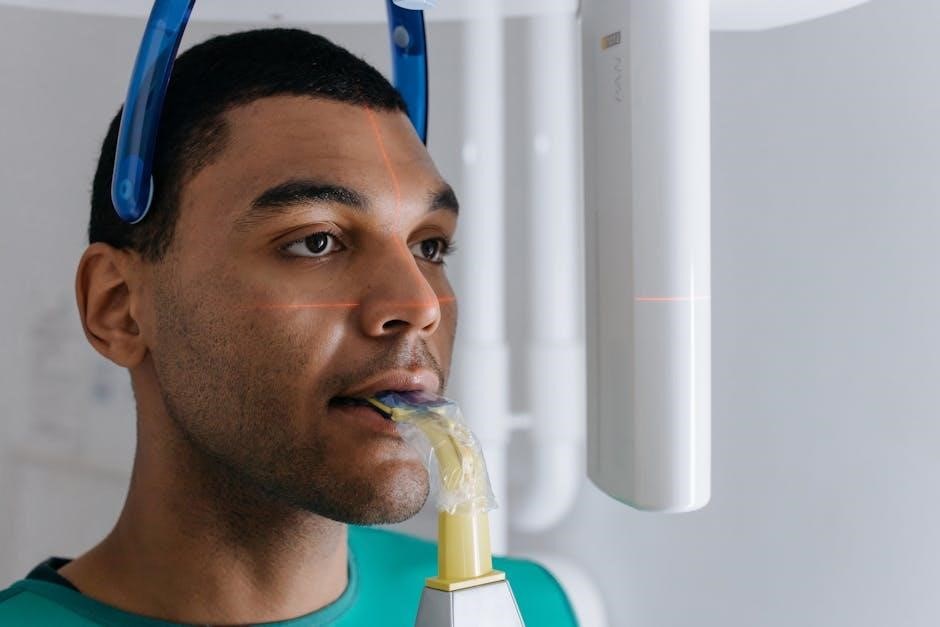
X-Ray Positioning Charts are vital visual guides, often available as PDF documents, detailing precise patient setups for radiographic exams.

These charts, frequently featuring illustrative images, ensure consistent and accurate image acquisition, crucial for diagnosis.

Resources like those found on Etsy offer examples of these learning tools for radiology technologists.

What are X-Ray Positioning Charts?

X-Ray Positioning Charts are comprehensive, detailed diagrams and guides used by radiologic technologists to consistently and accurately position patients for radiographic examinations. These charts aren’t simply static images; they are dynamic tools designed to optimize image quality and diagnostic value.

Typically, these charts are available in PDF format for easy access and portability, allowing technologists to quickly reference the correct positioning techniques at the point of care. A key feature of effective charts is the inclusion of illustrative images – anatomical illustrations and example radiographs – demonstrating the ideal positioning for each projection.

Charts specify critical alignment points, central ray angles, and patient preparation instructions. Resources, such as those found on platforms like Etsy, showcase examples of these educational materials. They are essential for both training and ongoing reference, ensuring standardized procedures across a radiology department and minimizing errors. They help to achieve optimal visualization of anatomical structures.

Importance of Accurate Positioning

Accurate positioning is paramount in radiography, directly impacting image quality and diagnostic accuracy. Deviations from established techniques can lead to anatomical structures being obscured, misrepresented, or entirely missed, potentially resulting in misdiagnosis or the need for repeat exposures.

X-Ray Positioning Charts, often found as PDF resources with accompanying images, serve as crucial tools to minimize these errors. They ensure consistent patient setup, reducing variability and improving the reliability of radiographic interpretations. Utilizing these charts, technologists can optimize the demonstration of specific anatomical details.

Resources like those available on Etsy highlight the value of these guides for both novice and experienced professionals. Proper positioning minimizes patient dose by reducing the need for retakes. It also aids in comparative studies, allowing for accurate assessment of changes over time. Ultimately, accurate positioning translates to improved patient care and more confident clinical decisions.

Understanding Anatomical Terminology

A solid grasp of anatomical terminology is fundamental to successful radiographic positioning. Terms like anterior, posterior, superior, inferior, medial, and lateral define anatomical locations and directional relationships, essential for interpreting X-Ray Positioning Charts and accurately positioning patients.

These charts, frequently available as PDF documents with illustrative images, rely heavily on this terminology to communicate precise positioning instructions. Understanding planes (sagittal, coronal, transverse) and anatomical landmarks is crucial for correctly aligning the patient to the central ray.

Resources, such as those found on platforms like Etsy offering educational materials, often reinforce this foundational knowledge. Misinterpreting anatomical terms can lead to incorrect positioning, compromising image quality and diagnostic value. Proficiency in this language ensures clear communication and consistent application of radiographic techniques, ultimately benefiting patient care.

Basic X-Ray Positioning Techniques

X-Ray Positioning Charts, often in PDF format with images, illustrate fundamental techniques.

Proper patient alignment and central ray angulation are key for diagnostic quality, as shown in available resources.

Chest X-Ray Positioning

Chest X-Ray Positioning requires meticulous technique, often guided by detailed X-Ray Positioning Charts available as PDF downloads. These charts, frequently incorporating illustrative images, demonstrate proper patient preparation and positioning for both PA (Postero-Anterior) and AP (Antero-Posterior) projections.

For a standard PA chest, the patient stands or sits upright, shoulders relaxed and drawn slightly back. The central ray is directed perpendicular to the chest, typically at the level of the seventh cervical vertebra. AP views are taken with the patient supine or semi-recumbent, with the central ray entering the chest anteriorly.

Key considerations include ensuring complete lung visualization, proper centering, and minimizing motion artifacts. Charts emphasize the importance of demonstrating the diaphragm, heart borders, and mediastinum clearly. Resources, like those found online, highlight anatomical landmarks and common positioning errors to avoid. Accurate positioning is paramount for reliable diagnostic interpretation.

AP (Antero-Posterior) Chest Positioning

AP (Antero-Posterior) Chest Positioning is frequently utilized when a patient cannot assume the PA position, often due to physical limitations. Detailed X-Ray Positioning Charts, often in PDF format and containing illustrative images, are crucial for proper technique.

With the patient supine or semi-recumbent, arms are typically positioned above the head to avoid overlapping with the lungs. The central ray is directed perpendicular to the chest, entering at the level of the sternum. Magnification is greater in AP views compared to PA, resulting in a larger cardiac silhouette and potentially obscured lung details.

Charts emphasize the need for precise centering and full inspiration to optimize image quality. Careful attention must be paid to collimation to minimize scatter radiation. While convenient, AP projections are less commonly used for routine chest imaging due to the inherent magnification and potential for diagnostic compromise.

PA (Postero-Anterior) Chest Positioning

PA (Postero-Anterior) Chest Positioning is considered the gold standard for routine chest radiography, providing a more accurate representation of cardiac size and mediastinal structures. Comprehensive X-Ray Positioning Charts, readily available as PDF downloads with detailed images, are essential for technologists.

The patient stands or sits with their shoulders relaxed and pulled back. The central ray is directed through the chest, entering at the level of the sternum. This minimizes the magnification of the heart, offering a more realistic assessment of its size.

Charts highlight the importance of full inspiration, demonstrated by observing the diaphragm’s position. Proper arm positioning – typically with hands behind the head – prevents superimposition onto the lung fields. PA projections offer superior visualization of the posterior structures, making them ideal for detecting subtle pulmonary abnormalities.

Abdominal X-Ray Positioning

Abdominal X-Ray Positioning requires meticulous technique to demonstrate subtle pathology. Detailed X-Ray Positioning Charts, often found as PDF resources with illustrative images, are crucial for consistent results. Two primary projections are utilized: AP and Lateral.

Successful abdominal imaging relies heavily on patient preparation, including bowel preparation when indicated. Charts emphasize the importance of removing metallic objects and ensuring the patient understands breathing instructions. Proper positioning minimizes distortion and ensures optimal visualization of abdominal organs.

The AP projection typically involves the patient supine with arms raised above their head. The central ray is perpendicular to the mid-abdomen. Lateral projections require the patient lying on their side, with the central ray entering at the level of the iliac crest. Accurate positioning is vital for differentiating between normal anatomy and potential obstructions or masses.

AP Abdominal Positioning

AP Abdominal Positioning is a fundamental radiographic technique. Detailed X-Ray Positioning Charts, frequently available as PDF guides with accompanying images, are essential for technologists. The patient lies supine on the X-ray table, with arms positioned either at their sides or elevated above the head – the latter is preferred to reduce superimposition of the ribs onto the abdomen.

Central Ray (CR) is directed perpendicularly to the mid-abdomen, typically at the level of the iliac crests. Ensuring the patient is in a true AP position, meaning the X-ray beam enters through the anterior aspect of the patient, is critical. Proper respiration is also vital; images are usually taken during full expiration to minimize motion blur and demonstrate optimal organ visualization.

Charts emphasize the importance of centering, shielding, and patient communication. Accurate positioning minimizes distortion and allows for clear assessment of abdominal structures, aiding in the diagnosis of various conditions.

Lateral Abdominal Positioning

Lateral Abdominal Positioning provides a complementary view to the AP projection, crucial for evaluating abdominal pathology. X-Ray Positioning Charts, often found as downloadable PDF resources with illustrative images, detail the precise technique. The patient lies in a true lateral decubitus position – meaning lying on their side – with the affected side up. Arms are positioned to avoid superimposition over the abdomen.

The Central Ray (CR) is directed perpendicularly to the horizontal plane of the patient, entering at the level of the iliac crest. Proper respiration is essential; images are typically acquired during full expiration. This minimizes motion and maximizes visualization of abdominal organs and any potential abnormalities.

Charts highlight the importance of patient positioning, shielding, and clear communication. Accurate lateral positioning helps differentiate between anterior and posterior structures, aiding in the diagnosis of obstructions, masses, and other conditions.

Skeletal X-Ray Positioning

Skeletal X-Ray Positioning demands meticulous technique to visualize bony structures accurately. Comprehensive X-Ray Positioning Charts, frequently available as PDF guides with detailed images, are indispensable tools for radiographers. These charts outline specific projections for each body region, ensuring consistent image quality and diagnostic value.

Positioning varies significantly depending on the bone being imaged. For example, shoulder imaging requires specific attention to glenohumeral joint alignment, while knee positioning focuses on patellar and femoral condyle visualization. Charts detail CR angles, patient orientation, and anatomical landmarks.

Proper patient positioning minimizes distortion and superimposition of structures. Utilizing these resources, technologists can consistently produce high-quality skeletal radiographs, aiding in the accurate diagnosis of fractures, dislocations, arthritis, and other bone-related pathologies. Resources like those found online provide valuable visual aids.

Upper Extremity Positioning (Shoulder, Elbow, Wrist, Hand)

Upper Extremity Positioning requires precise technique for optimal visualization of bones and joints. Detailed X-Ray Positioning Charts, often found as PDF documents with illustrative images, are essential for radiographers. Shoulder imaging commonly utilizes AP, lateral, and axillary projections, demanding careful attention to glenohumeral joint alignment and scapular positioning.

Elbow positioning includes AP and lateral views, ensuring clear visualization of the humeral and ulnar condyles. Wrist and hand imaging employs PA, lateral, and oblique projections to assess carpal bones and phalanges. Accurate centering, collimation, and patient positioning are crucial to avoid superimposition.

These charts provide step-by-step guidance, including CR angles and anatomical landmarks. Consistent application of these techniques, aided by visual references, ensures diagnostic-quality images for identifying fractures, dislocations, and arthritis. Online resources and educational materials supplement these charts.

Lower Extremity Positioning (Hip, Knee, Ankle, Foot)

Lower Extremity Positioning demands meticulous attention to detail for accurate radiographic assessment. Comprehensive X-Ray Positioning Charts, frequently available as PDF guides with detailed images, are indispensable tools for radiologic technologists. Hip examinations typically involve AP and lateral projections, requiring precise pelvic alignment and leg rotation.

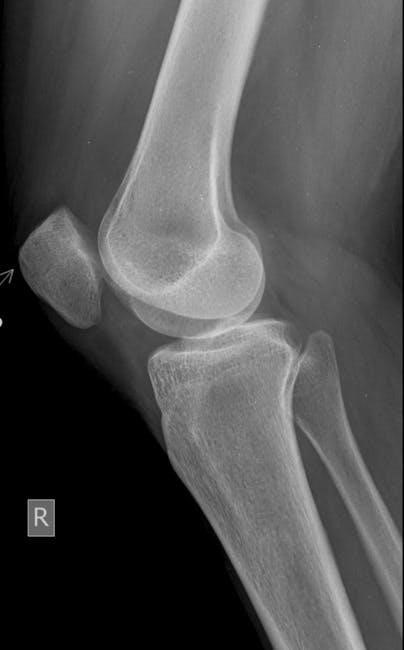
Knee imaging utilizes AP, lateral, and skyline (patellar) views to evaluate the femoral and tibial condyles, and patellofemoral joint. Ankle and foot positioning includes AP, lateral, and oblique projections, focusing on the talus, calcaneus, and metatarsals. Proper centering, collimation, and patient immobilization are vital to minimize motion artifacts.

These charts offer clear instructions, including CR angles and anatomical landmarks, ensuring consistent image quality. Utilizing these resources, alongside practical training, facilitates accurate diagnosis of fractures, dislocations, and degenerative joint disease.

Specific X-Ray Positioning Guides

Specific positioning guides, often found as X-Ray Positioning Charts in PDF format with images, detail techniques for unique anatomical regions.

These resources ensure optimal visualization for accurate diagnoses.

Skull and Facial Bones Positioning

Skull and facial bone radiography requires meticulous positioning to demonstrate complex anatomical structures effectively. Comprehensive X-Ray Positioning Charts, frequently available as downloadable PDF documents, are indispensable tools for radiographers.

These charts typically include detailed images illustrating proper patient positioning for various projections, such as the PA, Lateral, and Towels views. Accurate alignment of the midsagittal plane to the image receptor is paramount, ensuring symmetrical visualization of the cranial vault and facial bones.

Specific attention must be paid to centering, angulation, and patient immobilization to minimize motion artifacts. Charts often specify the central ray location and the required kilovoltage peak (kVp) and milliampere-seconds (mAs) settings for optimal image quality. Resources, like those sometimes found on platforms such as Etsy, can provide supplemental learning materials.

Understanding anatomical landmarks and potential pitfalls is crucial for obtaining diagnostically valuable images. Proper collimation is essential to reduce patient dose and improve image contrast. Utilizing these charts and adhering to established protocols are vital for accurate diagnosis and patient care.

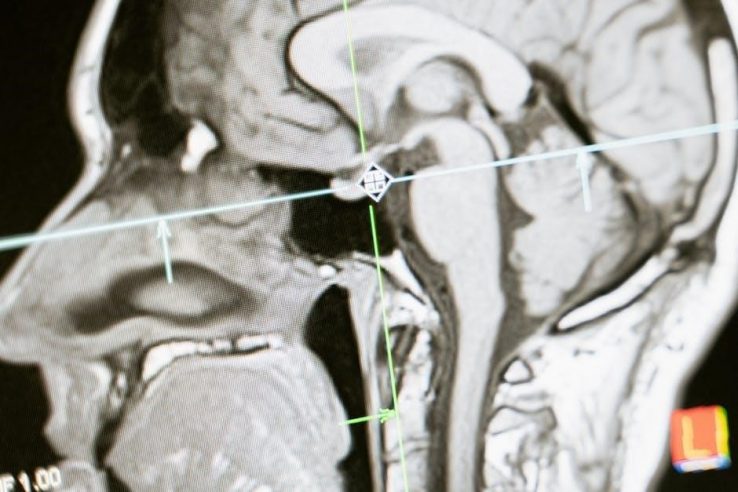
Spine Positioning (Cervical, Thoracic, Lumbar)

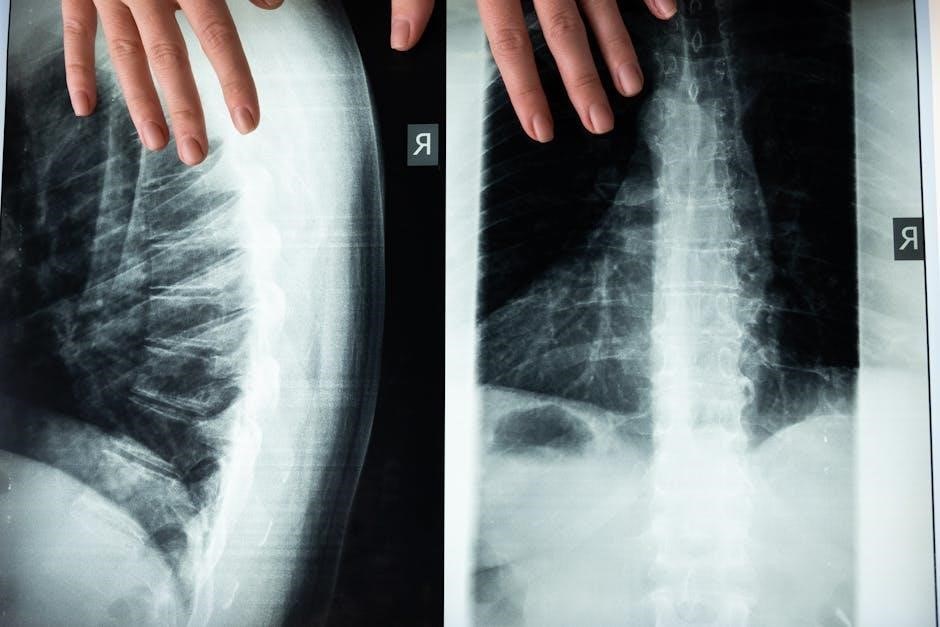
Spinal radiography demands precise technique due to the intricate anatomy and potential for subtle pathology. Detailed X-Ray Positioning Charts, often accessible as PDF guides, are essential for radiographers. These charts provide visual references, including images, for projections like AP, Lateral, and Oblique views of the Cervical, Thoracic, and Lumbar spine.

Accurate centering to anatomical landmarks – such as the spinous processes or intervertebral spaces – is critical. Proper patient positioning minimizes distortion and ensures visualization of vertebral bodies, pedicles, and intervertebral foramina. Charts specify appropriate kVp, mAs, and collimation to optimize image quality while minimizing radiation exposure.

Immobilization techniques are vital to reduce motion artifacts, particularly in the lumbar spine. Resources, sometimes available through online marketplaces like Etsy, can offer supplementary learning materials. Understanding the clinical indication and selecting the appropriate projection are key to a successful examination.

Careful attention to detail and adherence to established protocols are paramount for accurate diagnosis and effective patient management.

Pelvis Positioning

Pelvic radiography requires meticulous attention to detail to visualize bony structures and assess for fractures, arthritis, or congenital anomalies. Comprehensive X-Ray Positioning Charts, frequently found as downloadable PDF documents, are indispensable tools for radiographers. These charts incorporate illustrative images demonstrating proper patient positioning for AP and Lateral projections.

Central ray alignment is crucial; for the AP pelvis, the beam is centered to the symphysis pubis. Patient rotation must be minimized to prevent distortion of the iliac wings and obturator foramina. Proper shielding of gonadal regions is paramount, especially in younger patients. Charts detail appropriate technical factors – kVp, mAs, and SID – to optimize image quality.

Resources, occasionally available through platforms like Etsy, may offer supplemental educational materials. Accurate positioning ensures visualization of the iliac crests, ischial tuberosities, and sacrum. Careful evaluation of the sacroiliac joints is also essential.

Adherence to standardized protocols and consistent technique are vital for reliable diagnostic imaging.

Advanced X-Ray Positioning Considerations

Advanced techniques demand adapting standard X-Ray Positioning Charts (often PDFs with images) for complex cases.

Factors like patient anatomy and limitations require skilled adjustments.

Pediatric X-Ray Positioning

Pediatric X-Ray Positioning requires significant adaptation from adult techniques, prioritizing minimizing radiation dose while obtaining diagnostic images. X-Ray Positioning Charts, frequently available as PDF resources with detailed images, are invaluable tools, but must be interpreted with a nuanced understanding of growing anatomy and developmental variations.

Children have thinner bones and are more sensitive to radiation, necessitating lower technical factors. Immobilization is also crucial, as pediatric patients may struggle to remain still during the exposure. Charts often illustrate specific immobilization techniques using sponges, sandbags, or parental assistance.

Age-specific adjustments are paramount. Infant positioning differs drastically from that of a school-aged child. Charts will detail appropriate collimation to reduce scatter radiation and shield sensitive organs. Communication with the child and their parents is essential to alleviate anxiety and ensure cooperation. Resources, like those sometimes found on platforms such as Etsy, can supplement formal training, providing visual references for various projections.

Always verify the chart’s suitability for the patient’s age and size before proceeding.

Geriatric X-Ray Positioning

Geriatric X-Ray Positioning presents unique challenges due to age-related physiological changes. X-Ray Positioning Charts, often found as PDF documents with illustrative images, serve as essential guides, but require thoughtful adaptation. Decreased bone density (osteoporosis) and joint degeneration are common, impacting positioning and image quality.

Patients may have limited range of motion, requiring assistance and careful positioning to achieve the desired projection. Support devices like pillows and bolsters are frequently necessary for comfort and stability. Prolonged positioning can be difficult for elderly patients, so efficiency is key.

Communication is vital; explain the procedure clearly and address any concerns. Consider pre-existing conditions like arthritis or fractures when selecting positioning techniques. Charts should be consulted alongside an understanding of these limitations. Resources, sometimes available through online marketplaces like Etsy, can offer supplemental visual aids.

Shielding is particularly important in geriatric patients due to increased sensitivity to radiation. Always prioritize patient comfort and safety.

Patient Positioning with Physical Limitations

Patient Positioning with Physical Limitations demands adaptability and a thorough understanding of radiographic principles. X-Ray Positioning Charts, frequently available as PDF guides with detailed images, are crucial starting points, but often require modification. Immobilization due to injury, paralysis, or contractures significantly alters standard techniques.

Prioritize patient comfort and safety. Utilize supportive devices – pillows, sandbags, straps – to maintain the required projection while minimizing discomfort. Communication is paramount; explain the process and obtain patient feedback. Consider alternative positioning techniques to achieve the diagnostic goal, even if it deviates from the standard chart.

Collaboration with the patient and other healthcare professionals is essential. Be mindful of pain levels and adjust positioning accordingly. Online resources and educational materials, sometimes found on platforms like Etsy, can offer visual examples of adapted techniques.

Always document any deviations from standard positioning and the rationale behind them. Careful planning and execution are vital for obtaining diagnostic images.

Resources and Further Learning

X-Ray Positioning Charts in PDF format, with illustrative images, are available online and through textbooks. Platforms like Etsy offer learning aids.

Explore online tutorials and publications for continued professional development.

Where to Find X-Ray Positioning Charts (PDF)

X-Ray positioning charts in readily accessible PDF format are invaluable resources for radiology professionals and students alike. Numerous online repositories and educational platforms offer these charts, often complete with detailed images illustrating proper patient positioning for a wide range of radiographic procedures.

While comprehensive collections may require a subscription or purchase, many institutions and manufacturers provide free sample charts for educational purposes. Websites specializing in medical imaging resources frequently host downloadable PDF guides. A quick search using keywords like “radiography positioning charts PDF” will yield a multitude of results.

Interestingly, platforms like Etsy showcase and sell physical and digital copies of these charts, including specialized guides for specific body regions or modalities. These resources can be particularly helpful for those preferring a tangible learning experience. Always ensure the charts you utilize are current and aligned with established radiographic standards to guarantee accurate and safe patient positioning.

Remember to verify the source and credibility of any PDF chart before implementing its guidance in a clinical setting.

Online X-Ray Positioning Tutorials

Online X-Ray positioning tutorials are becoming increasingly popular, offering dynamic and interactive learning experiences beyond static PDF charts and images. These tutorials often feature video demonstrations of correct patient positioning techniques, supplementing visual guides with practical application.

Many medical imaging schools and professional organizations host online learning modules covering various radiographic projections. Platforms like YouTube also provide a wealth of free tutorials, though it’s crucial to assess the source’s credibility. These resources frequently complement downloadable PDF charts, allowing learners to visualize the concepts in motion.

Interestingly, even marketplaces like Etsy, while primarily known for selling physical learning aids, sometimes link to or promote associated online tutorial resources; Interactive simulations and quizzes are also becoming integrated into these online learning experiences, enhancing knowledge retention.

When utilizing online tutorials, always cross-reference the information with established radiographic protocols and ensure the techniques demonstrated align with current best practices.

Recommended Textbooks and Publications

While X-Ray positioning charts, often available as PDF downloads with detailed images, are valuable, a solid foundation from comprehensive textbooks remains essential. “Radiographic Positioning and Related Anatomy” by Kenneth L. Bontrager and Dennis M. Potter is a widely respected resource, offering in-depth coverage of positioning principles.

Another recommended text is “Merrill’s Atlas of Radiographic Positioning & Procedures” by Eugene D. Gregg and Robert A. Wagner, known for its clear illustrations and step-by-step guidance. These publications often include supplemental materials, sometimes in digital formats, mirroring the content found in PDF charts.

Professional organizations like the American Society of Radiologic Technologists (ASRT) also publish educational materials and journals relevant to radiographic positioning. Resources found on platforms like Etsy, while useful for quick reference, should be supplemented with the detailed explanations provided in established textbooks.

Regularly updating your knowledge with the latest editions ensures adherence to current standards and best practices in radiographic imaging.